
Carcinogenicity assessment
Supporting accurate and cost-effective
carcinogenicity safety assessment
Across the life sciences industry and beyond, there is a notable and conscious shift away from long term carcinogenicity animal studies. The objective of a carcinogenicity animal study is to identify compounds that can cause tumours in animals, and thereby increase the understanding of the cancer risk posed to humans. Within many sectors of the life sciences industry, animal testing is still considered a primary option for toxicity testing, and as a result is used heavily. However, the limitations of this model are now well understood and non-animal new approach methodologies (NAMs) present an ideal opportunity to improve on this current approach and provide alternative approaches to assessing carcinogenic risk.
Our solution
We can support you in your carcinogenicity risk assessments through our in silico software solutions; the Lhasa Carcinogenicity Database (LCDB), Vitic, Derek Nexus and Kaptis.



Click on the different software logos to learn more.
A flexible approach, tailored to your needs
This guided workflow illustrates one recommended approach to carcinogenicity assessment. Each Lhasa solution can also be used independently, or combined as needed, depending on your scientific questions, regulatory context and existing data.
Define the substance and assessment context using trusted carcinogenicity and toxicity data
Access curated in vivo and in vitro carcinogenicity data via the Lhasa Carcinogenicity Database Plus and Vitic, bringing together regulatory studies, legacy datasets, and expert-reviewed evidence to inform early risk understanding and contextualise your assessment.
Predict carcinogenic potential and interpret mechanistic evidence
Identify structural alerts associated with carcinogenic mechanisms using Derek Nexus.
Contextualise findings using mechanistic knowledge and adverse outcome pathways (AOPs) with Kaptis, helping to connect molecular events with potential carcinogenic outcomes and strengthen biological plausibility.
Integrate all evidence streams to evaluate uncertainty and confidence
Bring together experimental data, in silico predictions, and mechanistic insight using Kaptis to assess relevance, uncertainty, and confidence in the overall evidence base.
Lhasa tools support, not replace, expert scientific judgement, enabling transparent, scientifically robust, and auditable carcinogenicity assessments.
Support regulatory decision-making with traceable, defensible documentation
Derive an overall carcinogenicity position with clearly defined confidence levels, documented uncertainties, and recommended next steps, whether progression, further investigation, or risk management.
Generate transparent, traceable reports to support weight-of-evidence submissions and regulatory discussions, including those aligned with ICH S1B(R1).
LCDB Plus is a decision support tool with an expanded TD₅₀ dataset, compared to its predecessor, to help you identify and understand the reliability of existing data available for your compound or calculate new TD₅₀ values for proprietary data.
LCDB Plus highlights
Intelligent searching and transparent carcinogenicity data quality
LCDB Plus is presented within a user-friendly and standardised interface. Facilitating structure, substructure and similarity searches and presenting TD₅₀ values alongside an enhanced Lhasa Letter Graded Reliability Scoring result to assess studies.
Explore and calculate TD₅₀ values for determining acceptable intake limits
By producing a transparent methodology for calculating TD₅₀ values from experimental data, LCDB Plus calculates bespoke TD₅₀ values for proprietary compounds whilst remaining consistent with original CPDB values. Informing carcinogenicity assessment workflows, the tool offers validated data for efficient ICH M7 assessment of Class 1 impurities.
Our validated methodology is regulatory-aligned and partners with the aggregation of 127% more available carcinogenicity data values to inform acceptable intake (AI) limits and potential carcinogenic potency.
View TD₅₀ values and access maintained public carcinogenicity data
The Lhasa Carcinogenicity Database was founded on Lhasa TD₅₀ values calculated inline with the CPDB TD₅₀ values provided by Lois Gold and her team. The Lhasa Carcinogenicity Database (LCDB), founded in 2016, remains free to access. Serving as a significant source of long-term carcinogenicity studies, the database allows academics and researchers to understand existing public data.

Vitic is a source of high-quality, peer-reviewed public and proprietary toxicity data. Vitic can help you to understand if there is existing data available for your compound.
Vitic highlights
Access high-quality public and proprietary data
The data within Vitic is expert-curated, high-quality, peer-reviewed data from both published and unpublished sources.
Search for data within other related endpoints
Alongside carcinogenicity data, you can also search for data within other related endpoints such as mutagenicity and chromosome damage, which can help to build your understanding of a carcinogenic risk.
Find similar structural analogues using substructure or similarity searches
Where there is no exact match within Vitic, you can make use of the substructure or similarity search functionality.

Derek Nexus is an expert, knowledge-based prediction software that can help you to establish if there is a carcinogenicity hazard associated with your compound, in cases where there is no existing data available.
Derek Nexus highlights
Access over 40 years of expert Structure-Activity Relationship (SAR) knowledge for the carcinogenicity endpoint
Derek contains well-established Structure-Activity Relationship (SAR) knowledge for the carcinogenicity endpoint. The SAR knowledge is derived from both public and proprietary member data sources and is updated as new data becomes available.
Identify any toxicophores highlighting possible carcinogenic hazard
Assess your compounds against key toxicity endpoints in relation to expert derived toxicophores. The expert comments associated with a Derek Nexus alert can help you to decide if this compound structure is a concern or not.
Understand the SAR behind carcinogenicity predictions
The scientific comments which accompany a Derek Nexus alert will describe the alert mechanism of action.
Kaptis is a decision support solution that helps determine the carcinogenic potential of a compound, using adverse outcome pathways (AOPs) to organise knowledge in line with best practice.
Kaptis highlights
Mechanistic insight through adverse outcome pathways
Expert-derived AOPs provide the mechanistic context needed to connect molecular events with carcinogenic outcomes. By organising evidence in line with best practice and highlighting knowledge gaps, this approach helps prioritise further testing and supports faster, more informed human safety assessment decisions.
Run your own assessments with full transparency and confidence
Rather than relying on external consulting services that provide conclusions without transparent reasoning, assessments can be conducted and interrogated within your own organisation. This supports confidentiality, reduces time and cost, and ensures full visibility of the scientific rationale behind each decision.
Guided decision support from evidence to report
A structured, question-based workflow helps guide the weight-of-evidence process, identify missing information, and reduce uncertainty. This enables confident conclusions and the generation of transparent, traceable reports that support regulatory communication and submissions.
Regulatory support
Aligned with internationally recognised regulatory frameworks for carcinogenicity safety assessment.
ICH S1 & S1B(R1)
Guidance on when and how to conduct carcinogenicity studies for pharmaceuticals.
ICH S2
Guideline for genotoxicity testing and interpretation of results to support the safety evaluation of pharmaceuticals.
ICH S8
Guidance on assessing immunotoxicity during pharmaceutical development.
REACH (EC) 1907/2006
European regulation designed to protect human health and the environment from risks posed by chemical substances.
Frequently asked questions
How does Lhasa predict carcinogenicity while reducing or eliminating animal testing?
Lhasa combines in silico models, in vitro data, existing animal studies, and expert knowledge within an adverse outcome pathway (AOP) framework to predict carcinogenicity using a weight-of-evidence (WoE) approach, without relying on additional animal studies. Predictions and experimental findings are mapped onto a comprehensive network of carcinogenicity AOPs in Kaptis, supporting transparent, human-relevant assessments that can help replace or reduce traditional long-term rodent carcinogenicity studies.
How can Lhasa tools support carcinogenicity risk assessment of main ingredients and impurities?
Lhasa tools support carcinogenicity risk assessment across the full decision-making process, for both main ingredients and impurities, by:
- Characterising hazard and potency for relevant modes of action, such as genotoxicity, hormonal or immune-mediated mechanisms, and secondary pharmacology, using a combination of in silico predictions, curated experimental data, and public sources.
- Evaluating human relevance of findings and translating from experimental systems using adverse outcome pathways (AOPs) and mode-of-action analysis.
- Supporting exposure and dose-response considerations, where data are available (e.g., TD50 values in LCDB Plus), to inform human risk, particularly in high-exposure scenarios.
- Highlighting data gaps and suggesting targeted follow-up studies to refine the risk assessment.
Together, these capabilities provide a robust, transparent basis for human-relevant carcinogenicity risk assessment and informed regulatory decision-making, whether evaluating main ingredients with high exposure potential or impurities with genotoxic concerns under frameworks such as ICH M7.
What is Kaptis and how does it support human-relevant carcinogenicity assessment?
Kaptis is an in silico decision-support solution by Lhasa for carcinogenicity weight-of-evidence (WoE) assessment. It helps scientists determine the carcinogenic potential of a compound by capturing and connecting data from diverse sources (e.g. primary and secondary pharmacology, genotoxicity, hormonal perturbation, immune modulation, and repeat-dose toxicity) within a curated network of carcinogenicity adverse outcome pathways (AOPs). By organising evidence around biological mechanisms and human relevance, and embedding best-practice assessment principles, Kaptis supports transparent, human-relevant evaluations of cancer risk, including clear confidence in conclusions and suggested next steps. For example, Kaptis can facilitate more informed WoE assessments under ICH S1B(R1).
How do Lhasa tools support ICH S1B weight-of-evidence submissions?
Kaptis is designed to operationalise the weight-of-evidence framework described in ICH S1B(R1). It:
- Aligns data with the key ICH S1B(R1) factors, including primary and secondary pharmacology, genotoxicity, hormonal perturbation, immune modulation, repeat-dose toxicity, and histopathology.
- Organises evidence within an adverse outcome pathway (AOP) network to clarify biological plausibility and human relevance, while helping identify data gaps, links between factors, consistency across datasets, and hypotheses for further investigation.
- Provides a transparent structure for documenting scientific reasoning, including uncertainty, confidence in conclusions, and proposed next steps.
This structured approach helps justify the waiving or tailoring of 2-year rat carcinogenicity studies and supports clear, evidence-based communication between sponsors and regulators.
How do Lhasa tools support next-generation weight-of-evidence carcinogenicity assessments?
Lhasa tools such as Kaptis, Derek Nexus and Sarah Nexus enable an integrated, mechanism‑based approach to carcinogenicity. They:
- Aggregate and structure data from in vitro, in vivo and in silico sources – Derek Nexus, Sarah Nexus, Vitic, LCDB Plus.
- Contextualise those data on carcinogenicity AOP networks – Kaptis.
- Help identify modes of action, key events and human relevance – Kaptis.
- Define confidence in assessments and support confident decision‑making – Kaptis.
This supports robust, transparent and reproducible weight‑of‑evidence (WoE) assessments that align with ICH S1B(R1) expectations and make better use of non‑animal methods.
What reports can Lhasa generate for carcinogenicity regulatory submissions?
Using the Lhasa in silico suite for carcinogenicity assessment, users can generate well‑structured, narrative reports suitable for inclusion in ICH S1B(R1) carcinogenicity submissions and more.
Where needed, Consult Lhasa can prepare complete submission‑ready dossiers and support interpretation with expert consultation.
How can Lhasa tools reduce time and improve accuracy compared with manual carcinogenicity assessments?
Manual carcinogenicity assessments require searching, extracting, and reconciling large volumes of heterogeneous data. Lhasa tools streamline this process by:
- Using structured workflows to search for and collate relevant data from both public and internal sources.
- Providing in silico predictions to complement experimental data and help prioritise or target further testing efficiently.
- Structuring evidence in Kaptis around adverse outcome pathways (AOPs), enabling coherent, mechanism-based narratives while helping identify data gaps, links between evidence streams, and inconsistencies.
This approach supports faster assessments, clearer scientific rationales, and more consistent, auditable decisions compared with purely manual approaches. It can also help facilitate greater alignment between sponsors and regulators, reducing the risk of unexpected challenges during regulatory review.
Related publications
Paper
- Feb 2026
- Carcinogenicity assessment, Nitrosamine impurity risk assessment
Poster
- Aug 2025
- Carcinogenicity assessment, Safety profiling in drug discovery
Paper
- Jul 2025
- Carcinogenicity assessment
Related publications
Paper
- Feb 2026
- Carcinogenicity assessment, Nitrosamine impurity risk assessment
Poster
- Aug 2025
- Carcinogenicity assessment, Safety profiling in drug discovery
Paper
- Jul 2025
- Carcinogenicity assessment
Recent blogs
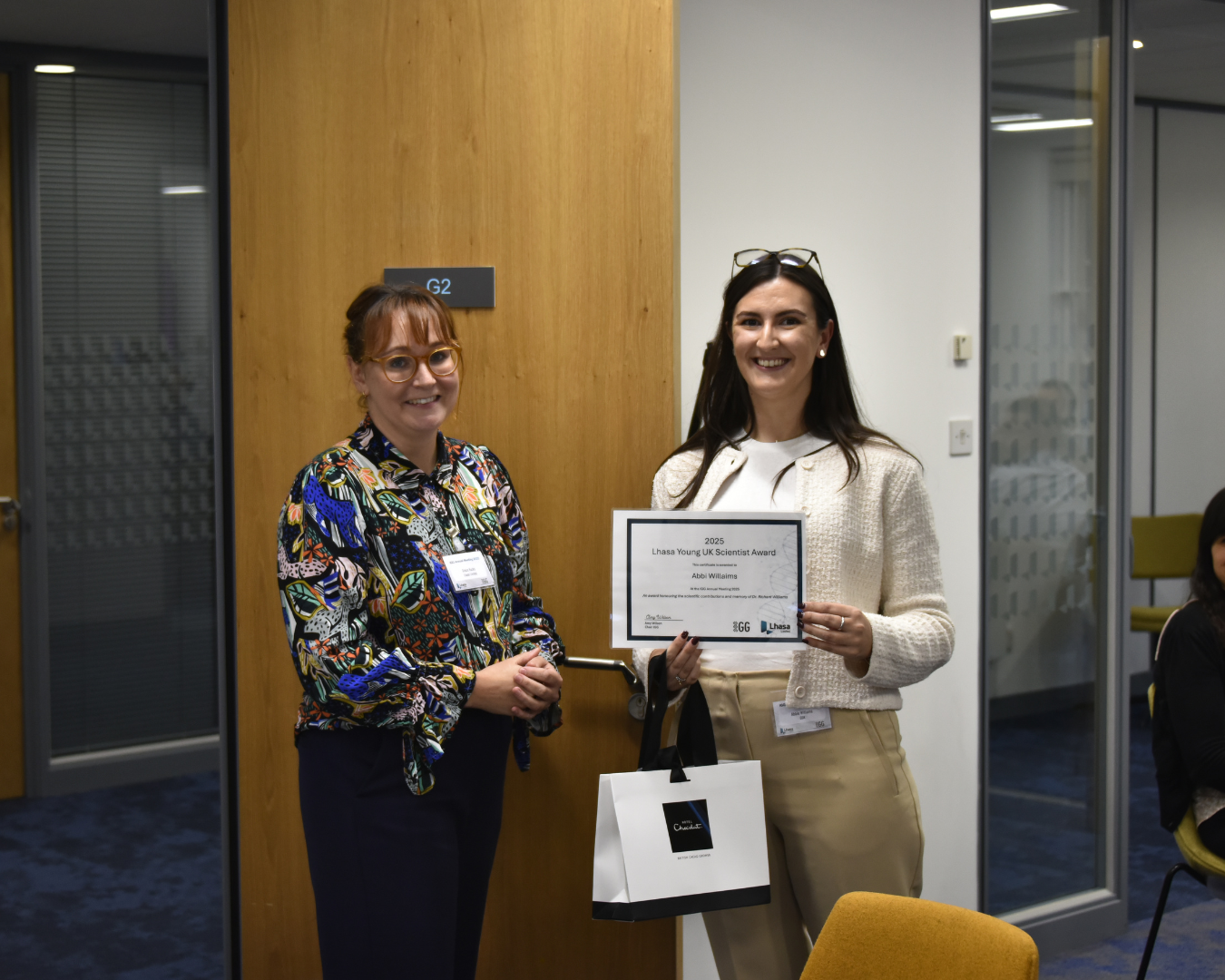
At Lhasa, we believe that the future of science is built on collaboration and the brilliance of the next generation. We are …

Understanding the metabolic fate of compounds is a requirement for safe pharmaceutical development. Whether supporting early-stage drug discovery, conducting impurity qualification for …

Mutagenicity assessment is no longer debated; it is embedded within regulatory science. The more important question today is not whether in silico …