
The UK Government’s Replacing Animals in Science strategy marks a pivotal moment for regulatory science, setting out a national ambition to accelerate the development, validation and uptake of non-animal New Approach Methodologies (NAMs).
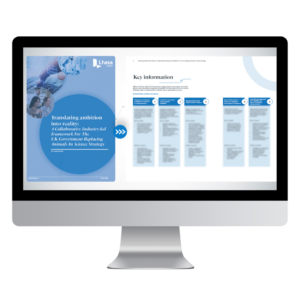
Lhasa Limited has published a new whitepaper, Translating ambition into reality: A Collaborative Industry-led Framework for the UK Government Replacing Animals in Science Strategy, which outlines practical priorities for turning this ambition into confident, real-world application.
Informed by a cross-sector roundtable convened by Lhasa, which included representatives from organisations including AstraZeneca, Cruelty Free International, GlaxoSmithKline, Kirkland Consulting, Labcorp, Liverpool John Moores University, NC3Rs, Syngenta and Unilever, the paper examines key priorities for accelerating the adoption of non-animal new approach methodologies across safety assessment and regulatory science.
As non-animal methods continue to advance, adoption will depend on more than method availability. These approaches also need to support real regulatory decisions, with confidence in how evidence is generated, validated, benchmarked, shared and applied.
The whitepaper draws on insights from a cross-sector roundtable chaired by Lhasa, bringing together perspectives from industry, academia, NGOs and research funders. It identifies where coordinated action is needed to strengthen the uptake of NAMs across chemical safety assessment and regulatory decision-making.
Dr Anthony Lynch, Executive Director of Genetic and Investigative Toxicology at GlaxoSmithKline, highlighted the role of validation, qualification and data infrastructure in enabling the wider adoption of NAMs:
“The Lhasa whitepaper is a timely contribution to the debate on NAMs.
It offers a considered perspective on the adoption of NAMs in industry in response to the UK Government’s Replacing Animals in Science strategy, identifies several key pillars to support their wider implementation, including validation and qualification in the regulatory biosciences, and highlights the important role of data infrastructure in enabling delivery. ”
Dr Charlie Stevenson, Senior Chemicals Regulatory Advisor, Cruelty Free International and roundtable delegate, highlighted the role of collaboration in supporting the delivery of the UK Government strategy:
“Collaborating with Lhasa on the publication of this white paper has been highly beneficial. It clearly sets out the need for the UK Government and regulatory agencies to work closely with industry, academia and NGOs to execute meaningful and timely actions that will actively drive the replacement of animals in science. By bringing together our collective expertise, we can support the phase-in of cutting-edge, non-animal approaches, and phase-out cruel and redundant tests on animals.
It’s now time to turn words into action and truly cement the UK as a leader in this field by turning the strategy into reality. ”
As an independent, not-for-profit organisation, Lhasa has worked for more than 40 years with over 570 members from industry, regulators, and academia to support confident chemical safety decisions. Through in silico science, expert review and secure pre-competitive data-sharing, Lhasa has practical experience in many of the areas now central to the UK Government’s non-animal methods agenda.
Five priorities for delivering the UK Government’s Replacing Animals in Science strategy
The Translating ambition into reality: A Collaborative Industry-led Framework for the UK Government Replacing Animals in Science Strategy whitepaper identifies five implementation priorities to support adoption:
- Regulatory submission confidence
Establishing clarity on the evidence needed for NAMs to support safety decisions. - Context of Use-led validation
Ensuring methods are evaluated against defined regulatory questions and decision contexts - Modern benchmarking approaches
Using relevant, high-quality datasets to assess the performance and applicability - Trusted data infrastructure and stewardship
Enabling secure, well-governed data-sharing to build confidence while protecting confidentiality. - International alignment and scientific capability
Supporting consistency across global regulatory frameworks and strengthening workforce readiness for adoption
Dr Chris Barber, Chief Executive Officer at Lhasa Limited, said:
“The UK strategy creates an important opportunity to accelerate the adoption of non-animal methods, but delivery will depend on more than scientific innovation alone. Confidence will require clear evidence standards, a trusted data infrastructure and practical validation approaches that reflect how these methods will be used in real decisions.
Lhasa is well placed to support that ambition through our experience in in silico science, expert review and collaborative data-sharing.”
The paper highlights practical barriers to adoption in industry and identifies where evidence standards, including uncertainty around evidential standards, validation frameworks and access to high-quality data. It sets out where alignment between regulatory bodies, industry and the wider scientific community will be required to enable progress.
Supporting the next phase of implementation
The publication marks the start of a wider Lhasa programme of engagement focused on supporting implementation of the UK strategy. This includes working with members and partners to explore how in silico science, data stewardship, and cross-sector collaboration can strengthen the confident adoption of non-animal methods.
Lhasa welcomes engagement with organisations working on NAMs implementation, data-sharing and regulatory confidence.
About Lhasa Limited
Lhasa Limited is a not-for-profit scientific organisation dedicated to advancing human health by reducing reliance on animal testing and enabling the sharing of scientific data and expertise. Through innovative software solutions and a collaborative member network, Lhasa empowers scientists worldwide to make confident chemical safety decisions that support better health outcomes.