

Chat with us, powered by LiveChat Lhasa Excipients Data Sharing Initiative

Excipients

Facilitating industry collaboration and data sharing on the tolerability of pharmaceutical excipient formulations

Our solution

Understand the levels of toxicity of pharmaceutical excipients to establish permissible and safe limits for these substances.

The aim of the Lhasa Excipients data sharing initiative is to facilitate the anonymous sharing of excipient and vehicle toxicity data.

As a result of this industry collaboration, Lhasa is pleased to offer a pharmaceutical excipients databse.

Being a member results in access to proprietary formulation data to help you refine your experiments, minimize animal testing and support regulatory submissions.

Contact us

Key highlights

Over 4,000 tolerability records for a total of 1,437 different pharmaceutical formulations:

Refine your experiments 

Utilising proprietary data and mitigating the duplication of experiments across the landscape. 

Use alternative methods for assessing chemicals

Reducing the need for and refining ongoing animal testing

Make more informed decisions

Reaching confident decisions earlier to guide safe and efficient formulations

Regulatory support

REACH

Among other aims, the Registration, Evaluation, Authorisation and Restriction of Chemicals (REACH) aims to reduce animal testing by promoting the use of alternative methods of assessing chemicals.

The Lhasa Excipients data sharing initiative continues to aid industry data sharing and support REACH submissions by making propriety data easily accessible via a custom curated database.

Discover how you can become part of the Excipients data sharing consortium.

Related publications

Paper

Paper

Recent blogs

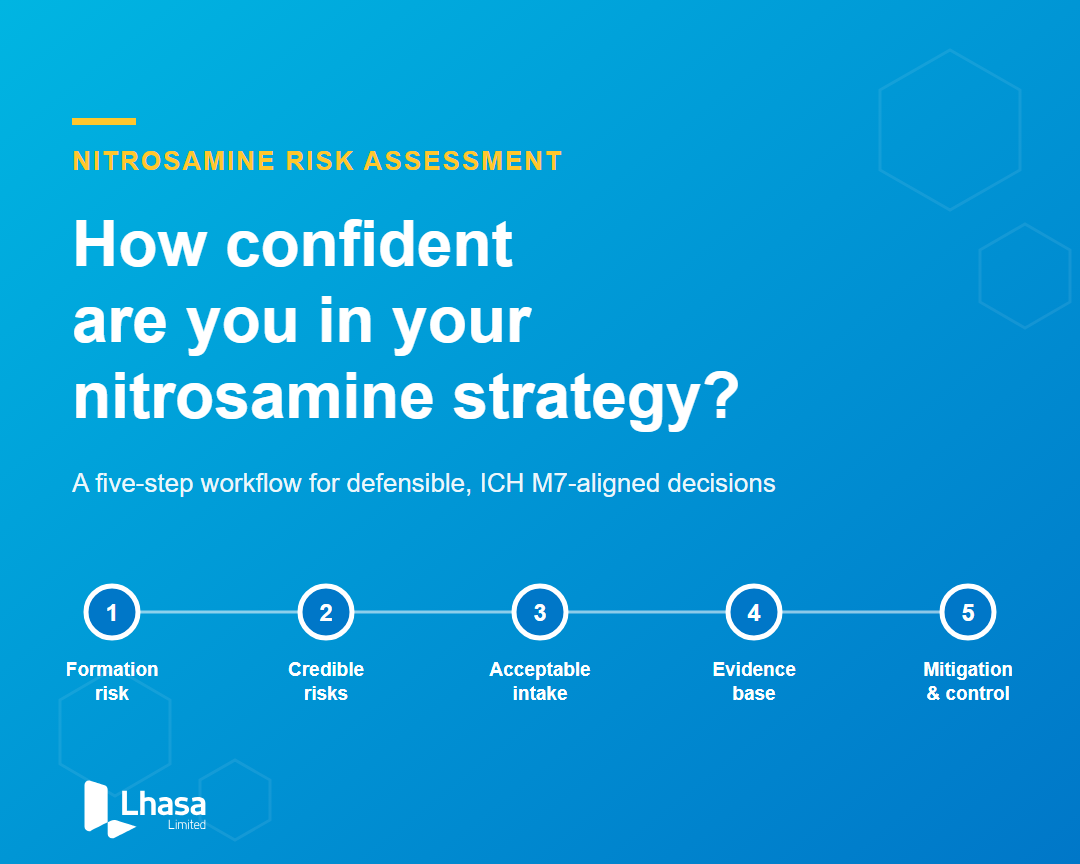
How do you assess nitrosamine impurity risk? Work through five steps: identify where nitrosamines could form, gather existing mutagenicity and carcinogenicity data, …
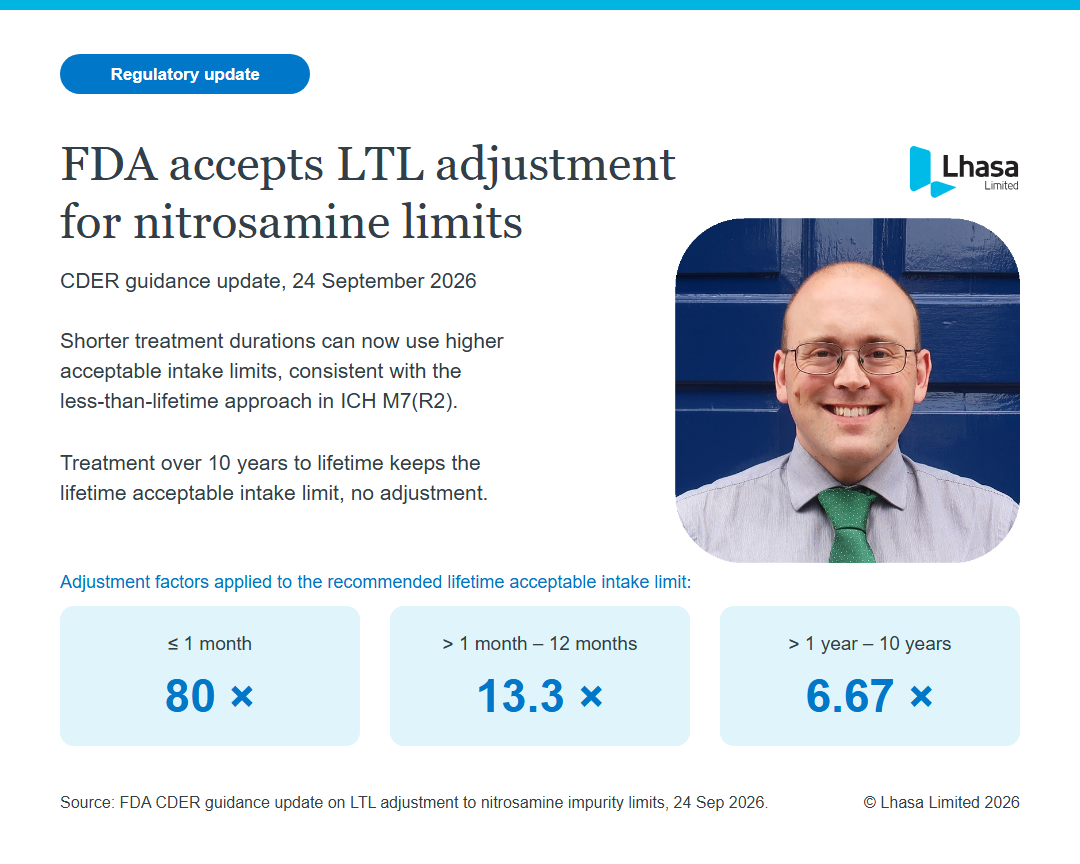
by David Ponting, Senior Principal Scientist, Lhasa Limited On 24 September 2026, the US Food and Drug Administration (FDA) published a guidance …
Forced degradation study design that is both defensible and efficient requires insight into the specific reactivity of an API before work begins …