










Chat with us, powered by LiveChat

E&Ls Europe 2025: Building defensible justifications under ICH Q3E

Insights on ICH Q3E, Extractables & Leachable (E&L) and risk assessment submissions

Interpreting grey areas in the draft ICH Q3E guideline

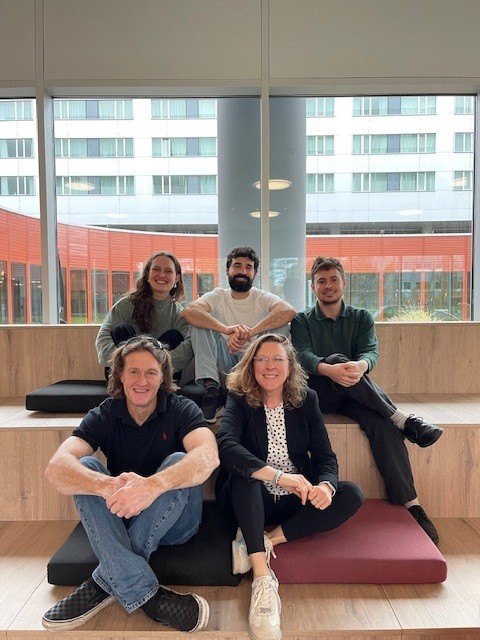
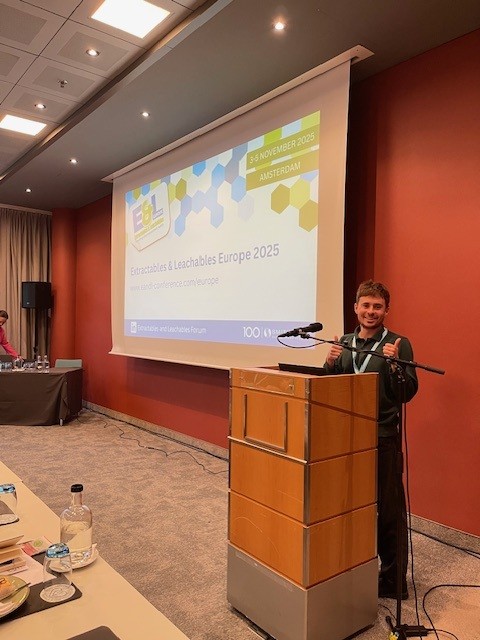
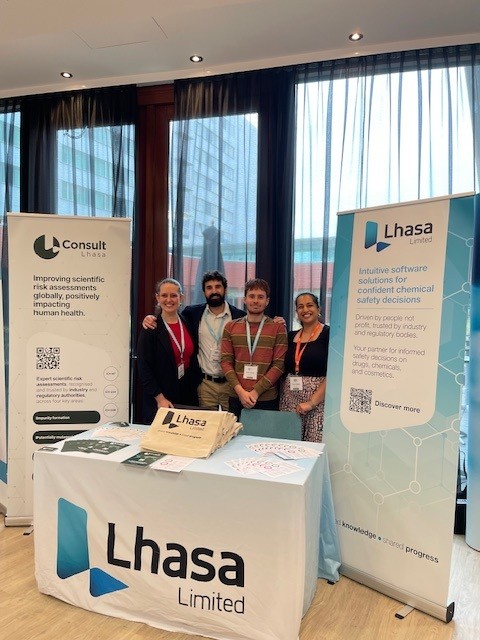
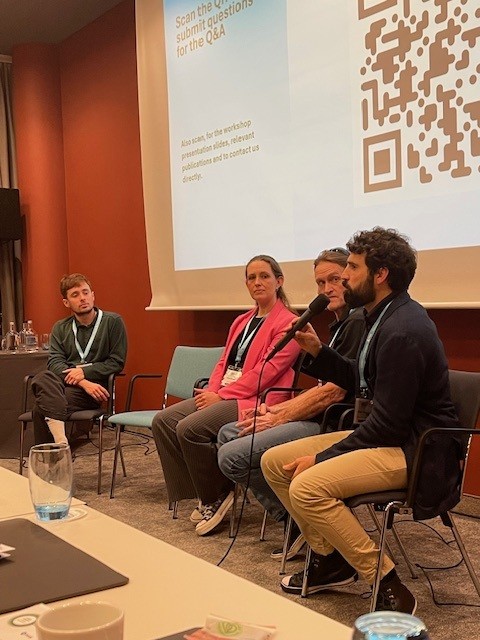
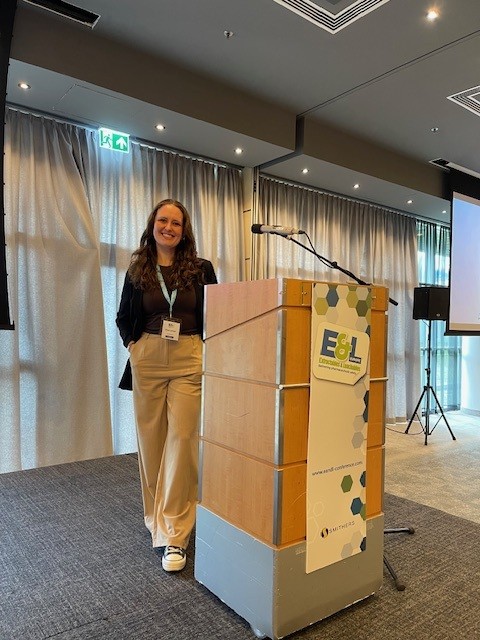
Earlier this month, the Lhasa Limited team, alongside Dr Lance Molnar, Head of Non-Clinical Operations and Risk Assessments at Viatris, and Dr Patricia Parris, Toxicology Impurity Risk Management at Pfizer, attended the Smithers E&L Europe 2025 conference in Amsterdam. The highly anticipated event offered one of the first opportunities for the scientific and regulatory community to collectively explore and discuss the draft ICH Q3E guideline, released in August 2025.

The release of the ICH Q3E for public consultation marks a significant milestone for the pharmaceutical and biotechnology industries. It sets out a harmonised, risk-based framework for the assessment and control of organic impurities that migrate from packaging or manufacturing components into a final drug.

The headline theme throughout the event was clear: the draft ICH Q3E guideline has added significant structure to the E&L landscape. It introduces a unified, risk-based approach that integrates decades of advancements in E&Ls, to provide a practical path forward for scientists across the globe.

A Lhasa Limited focus on practical application

Lhasa was proud to host a sponsored workshop on the first day of the event, ‘E&L risk assessment under ICH Q3E’, which drew a capacity audience and sparked a conversation that continued throughout the conference. The session explored how to translate the draft ICH Q3E principles into day-to-day practice, with in-session questions reflecting both industry and regulatory perspectives.

- Patricia Parris, Toxicology Impurity Risk Management, Pfizer

"The discussion has evolved beyond what is detected to how findings can be scientifically justified"

Is it time to move on from the ‘one compound, one PDE’ mindset?

Several delegates asked whether a Permitted Daily Exposure (PDE) remains the only valid approach for defining acceptable exposure levels. This reflects a clear widening of the scope of how toxicologists are thinking about control strategies.

- Dr Lance Molnar, Head of Nonclinical Operations and Risk Assessment, Viatris

“Every toxicological assessment doesn’t need to end in a PDE”

Weight of Evidence (WoE) approaches to assert the safety of these same leachables can be equally informative, provided they are transparent, robust, and scientifically justified.

Interpreting grey areas in the draft ICH Q3E guideline

The session Q&A highlighted where the draft ICH Q3E guideline offers limited guidance, emphasising the continued need for expert scientific judgement. Examples included:

  • Whether per- and polyfluoroalkyl substances (PFAS) fall under Class 1 leachables, panellists confirmed they remain outside the draft ICH Q3E guideline’s defined scope and require case-by-case assessment.
  • For parenteral products, the recommendation was to follow the most conservative limits until final publication.
  • For inhalation products, the published thresholds serve as a reference point, but local or route-specific toxicity must still be evaluated.
- Dr Julia Martins, Scientist, Lhasa Limited

“These discussions underline that Q3E shifts more responsibility onto applicants to justify their scientific selections”

Class 2 complex compounds

While the draft ICH Q3E guideline introduces a clear structure for categorising leachables, the continued presence of high numbers of Class 2 leachables emerged as a popular talking point.

These substances:

  • Must be qualified for both mutagenic and non-mutagenic safety concerns if they exceed the relevant thresholds
  • Do not have an established PDE and are not of sufficiently low systemic toxicity to be considered as Class 3
  • Often lack sufficient toxicological data needed to calculate acceptable exposure level

Delegates highlighted that Class 2 compounds could potentially represent a new assessment bottleneck, due to:

  1. Increased analytical sensitivity, detecting more low-level species with insufficient toxicological data
  2. Many class 2 compounds lack a sufficient toxicological profile due to scarce experimental data, preventing a straightforward PDE derivation
  3. Justification responsibility shifts to the applicant, requiring a structured, reproducible rationale
  4. Manual read-across is time-intensive and subjective, making consistency difficult across submissions.

During the Q&A, questions such as “How do you establish safety without a PDE?” and “How should intravitreal drug leachables be controlled?” all pointed to this same challenge.

This challenge also reflects why Lhasa is exploring more structured ways to support consistency in read-across assessments. As part of this work, a new E&L use case is being developed within our Acrostic solution to help users organise and communicate their scientific rationale more clearly.

If you would like to receive updates as this develops, you can sign up to our E&L mailing list.

A generalised safety assessment structure under the draft ICH Q3E guidance

Throughout the discussion, delegates reflected on how the principles in the draft guideline can be approached in practice. Although the draft ICH Q3E guidance does not prescribe a fixed workflow, several recurring scientific questions help structure decision-making.

Drawing on the ‘Safety assessment process for leachables using the safety evaluation thresholds’ featured in the ICH Q3E guidance, these questions include:

1. Is the leachable an elemental impurity?
→ Evaluate is using ICH Q3D.
2. Is it a class 1 leachable?
→ Use compound-specific limits where possible
3. Is the leachable mutagenic or carcinogenic?
→ Apply ICH M7 principles using rule-based and statistical (Q)SAR predictions to derive a safe limit under the identified acceptable intake (AI) of the threshold of toxicological concern (TTC).
Does it raise local toxicity concerns?
→ Compare available data, thresholds, or use non-animal methods to fill gaps.
Does it raise systemic toxicity concerns?
Identify data or apply read-across to determine PDE or margin of safety.
– Coming soon to Acrostic.

Systematic justification through in silico approaches

Questions raised during the workshop reflected a clear shift toward integrating computational methods into justification workflows, again indicating a move towards a more WoE methodology for protecting patient safety:

  • “What validation statistics are available for skin and eye irritation
  • “Can Zeneth predict degradation under gamma sterilisation?”
  • “Do you see increasing demand for in silico models under ISO 10993-1?”

Lhasa solutions, Derek Nexus, Sarah Nexus, and Zeneth support transparent, traceable toxicological, mechanistic, statistical and degradation pathway reasoning that aligns with ICH M7. While Vitic and Derek Nexus provide curated experimental data and reliable predictions for local toxicity endpoints such as irritation and sensitisation – areas that can be especially relevant for complex routes of administration.  Together, these in silico resources help build scientifically robust, reproducible justifications where empirical data may be limited.

To support safety risk assessments, including the emerging Class 2 challenge, Lhasa has developed a new systemic toxicity use case for E&Ls in its read-across solution, Acrostic.

- Dr Jack Yung, Global Alliance Manager, Lhasa Limited

“Our goal is to provide a transparent, systematic framework for read-across that supports consistent decision-making where Q3E is least prescriptive.”

These approaches enhance reproducibility, reduce subjectivity, and strengthen the scientific basis for regulatory submissions.

Looking ahead

The engagement at E&L Europe 2025 reflects a community ready to move from detection to defensible justification.
By combining risk-based thinking with in silico tools, the sector can strengthen scientific rationale, transparency, and regulatory confidence.

Thank you to everyone who visited us at our booth or attended our industry-hosted session. We look forward to staying connected and continuing the conversation!  

If you would like a personalised demonstration of our in silico solutions, you can schedule a meeting with our business partnerships team.

Weight of Evidence (WoE) approaches to assert the safety of these same leachables can be equally informative, provided they are transparent, robust, and scientifically justified.

Last Updated on December 12, 2025 by lhasalimited

You may also like

Following our recent Lhasa Limited hosted webinar, ICH S1B(R1): industry and regulatory best practice for confident carcinogenicity assessment, attendees had the rare …

In this latest blog, we will define the difference between certainty and uncertainty in the ICH M7 guideline for mutagenic impurities. Delving …

Carcinogenicity assessment is a critical step in drug development. Teams must balance regulatory compliance, development timelines, and ethical testing, often with incomplete …