Chat with us, powered by LiveChat 2025 Lhasa Publication Awards - Chemical Safety Progress

2025 Lhasa Publication Awards: The leading research in chemical safety

Just before the holiday period, our community voted on the most impactful scientific papers of the year authored by industry and regulatory experts and co-authored with Lhasa Limited.
These awards recognise the work driving progress in toxicology and chemistry. They highlight the vital collaborative efforts between our scientists and industry partners, helping to shape the future of chemical safety and reduce the need for animal testing.
This year’s winners tackle some of the industry’s most pressing challenges, from the “nitrosamine saga” to the complexities of extractables and leachables (E&L) across 3 categories.

Predicitive Toxicology

The Winner: Comprehensive extractables and leachables sensitisation analysis and practical application of a risk-based approach to sensitisation assessment for parenteral drug products

Should you worry about chemicals leaching into parenteral drug products causing immune system sensitisation? This study provides a reassuring, data-driven “no”, as current safety limits are already protective enough .

  • The study found a low 5% prevalence of potent sensitisers in E&L datasets, driven by rigorous “Quality by Design” material selection.
  • Established safety frameworks (such as ICH M7 and ELSIE TTCs) provide over 95% coverage against the induction of sensitisation.
  • The research suggests that additional qualification thresholds for local toxicity are unnecessary for parenteral drug products.

By using historical data from the Local Lymph Node Assay and conservative in silico predictions, chemists and toxicologists can ensure a robust, risk-based assessment.

Read the Full Paper

 
Martyn
Co-author Martyn Chilton receiving his award
I’ve really enjoyed collaborating with the ELSIE sensitisation sub-team over the last couple of years and was very pleased to see this paper released into the wild..

Dr Martyn Chilton, Lhasa Co-author

Nitrosamine Mechanistic and Analytical Chemistry

The Winner: Nitrite testing in excipients – Industry best practices

The formation of nitrosamines in drug products is often driven by trace nitrites in excipients. This paper serves as an industry “best practice” guide for the analytical challenge of measuring these small amounts.

  • Nitrite impurities pose a critical safety risk because they can react with vulnerable amines to form carcinogenic Nitrosamine Drug Substance Related Impurities (NDSRIs).
  • The industry employs numerous specialised high-sensitivity analytical techniques to detect nitrite at extremely low concentrations.
  • The Lhasa Nitrites Database facilitates industry-wide data sharing to reduce testing burdens and manage nitrite levels.
Gem
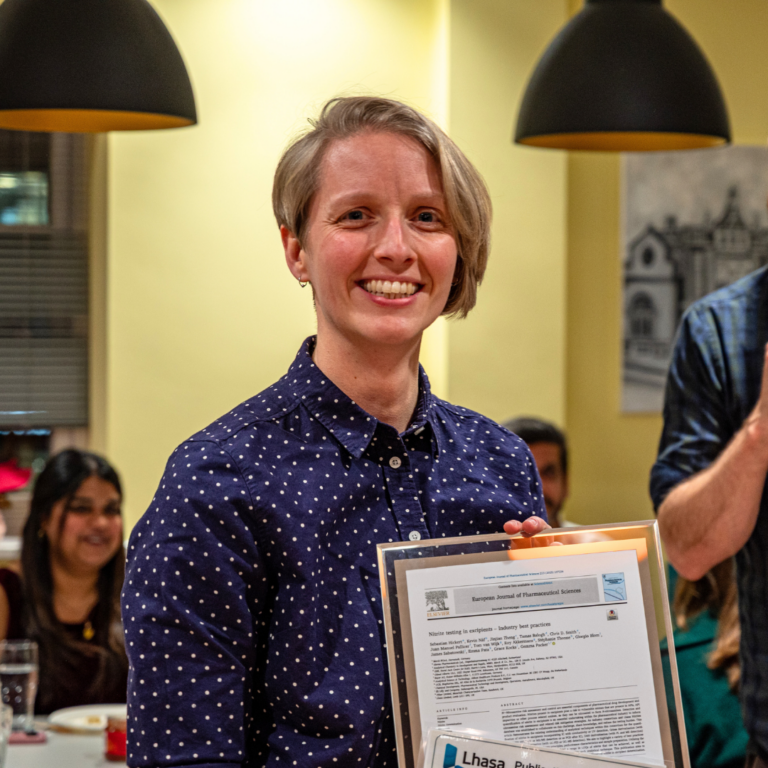
Corresponding author Gem Packer receiving her award
Grace
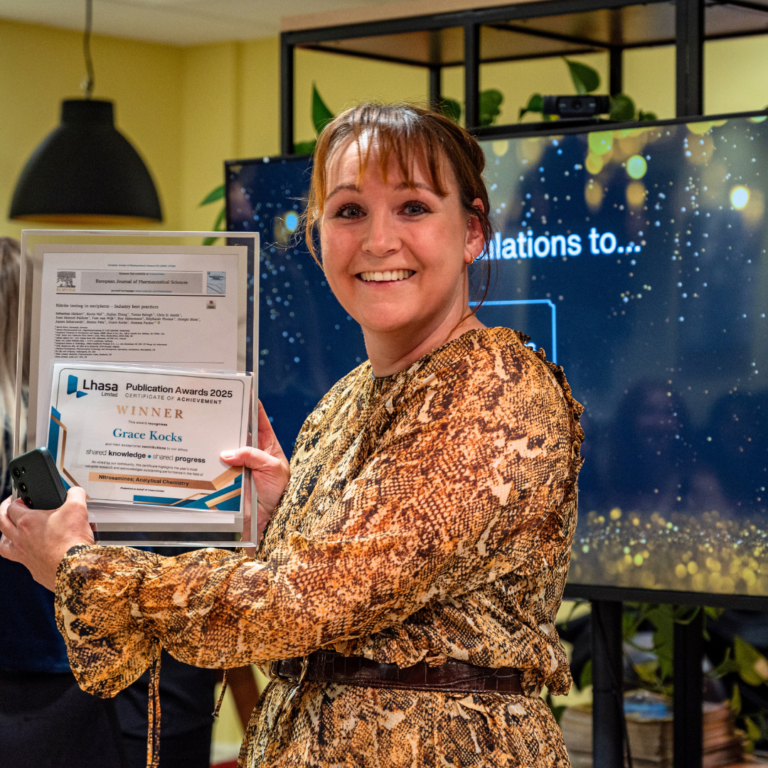
Co-author Grace Kocks receiving her award
Our goal was to share this collective insight so that others can make informed choices on nitrite determination and ultimately strengthen nitrosamine risk mitigation strategies across industry.

Dr Gemma Packer, Lhasa Corresponding Author

Nitrosamine Risk Management and Regulatory Approaches

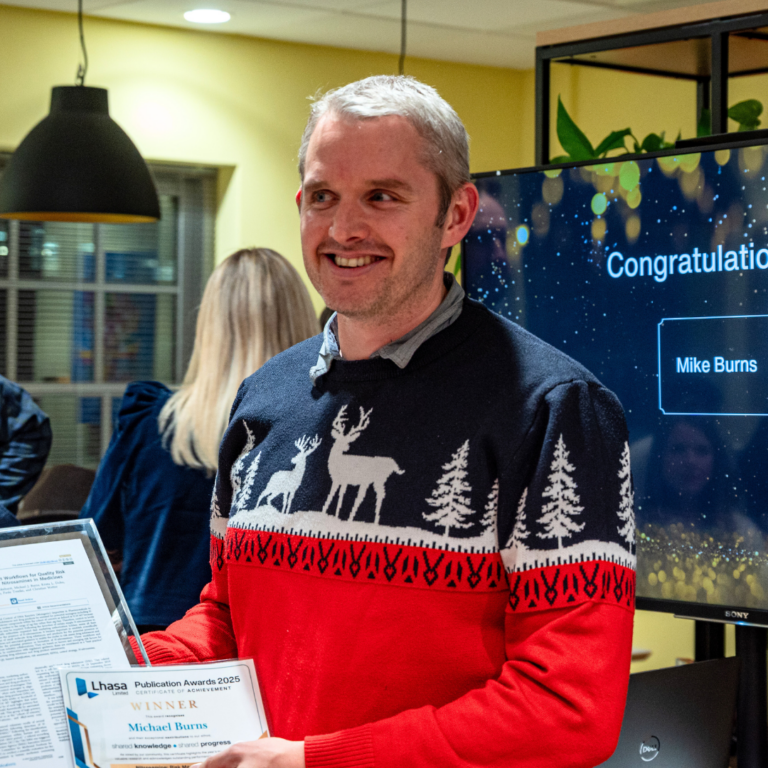
The Winner: Drug substance and drug product workflows for quality risk management for the presence of nitrosamines in medicines

As nitrosamines remain a “cohort of concern” due to their potential carcinogenicity at nanogram levels, this paper provides a scientific compass for risk assessment.

  • The authors propose a four-stage framework (identify, analyse, evaluate and control) aligned with ICH Q9 principles.
  • This framework helps mitigate the “nitrosamine triangle” formed by vulnerable amines, nitrosating agents, and promoting environmental conditions.
  • Assessments must review the entire lifecycle, from synthetic steps and recovered solvents to environmental hazards like atmospheric NOx.

If predicted levels reach 10% of the Acceptable Intake (AI), confirmatory testing or mitigation strategies (like using ascorbic acid as a scavenger) are required.

Read the full paper


The approaches outlined aim to help pharmaceutical and generics manufacturers stay ahead of potential nitrosamine risks by proactively assessing and reducing them, in line with the latest guidance.

Dr Michael Burns, Lhasa Co-author

Mike
Co-author Mike Burns receiving his award

Supporting the scientific community

We would like to extend a warm thank you to all the authors we collaborated with in 2025 and to everyone who voted. By collating knowledge through our consortia, we continue to develop intuitive decision-support tools that support you to make informed safety decisions. If you would like to receive the latest updates on Lhasa publications and research, update your email preferences.

Do you have questions about how these findings impact your risk assessment strategy?


Last Updated on January 15, 2026 by lhasalimited

You may also like

We recently had the pleasure of hosting the second Lhasa/IPEC Nitrites in Excipients Collaborative Meeting at our Head Office in Leeds. Following …

Curious to find out what we’ve been up to in 2025? This year, we have driven advancements in regulatory science, delivered innovation …

Insights on ICH Q3E, Extractables & Leachable (E&L) and risk assessment submissions Interpreting grey areas in the draft ICH Q3E guideline Earlier …